
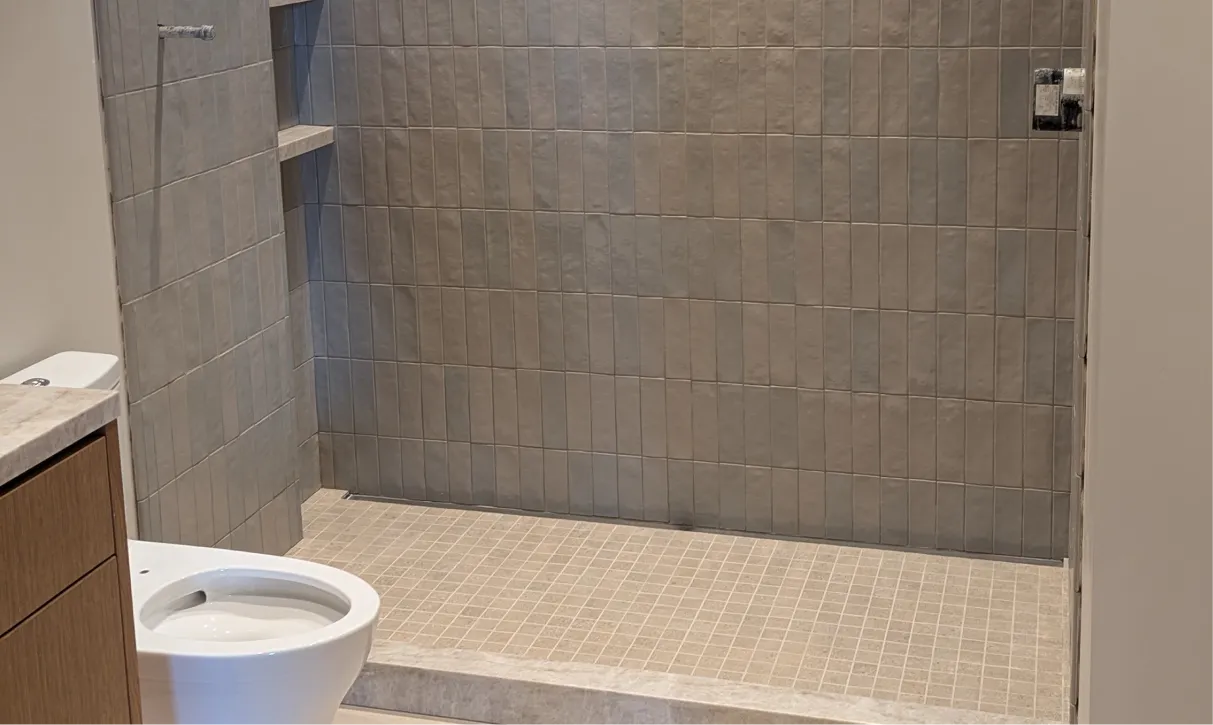
Inadequate Surface Preparation
Skipping or rushing surface preparation before tile setting ranks among the most expensive shortcuts homeowners and inexperienced contractors take during remodeling projects. The substrate beneath your tile must be completely level, structurally sound, clean, and properly primed. When tiles are laid over dusty, uneven, or compromised surfaces, adhesion fails within months rather than decades.
In Lafayette’s older homes, where settling and moisture exposure are common, substrate issues become even more critical. A floor that looks flat to the eye may have variations exceeding industry tolerances, causing tiles to crack under foot traffic or creating lippage where edges sit at different heights. Walls with old adhesive residue or paint prevent modern thin-set mortars from bonding correctly, leading to hollow-sounding tiles that eventually detach.
The financial consequences escalate quickly. Removing failed tile installation and starting over typically costs 60-80% more than doing it correctly the first time. You’ll pay for demolition, disposal, new materials, and a second round of labor. Homeowners who hire qualified tiling contractors avoid this trap entirely, as experienced installers invest the necessary time in substrate evaluation, leveling compound application, and proper underlayment installation before a single tile goes down.
Wrong Adhesive and Grout Selection
Selecting the wrong adhesive or grout for your specific tile type and location creates problems that may not surface until after your remodel is complete. Ceramic, porcelain, natural stone, and glass tiles each require different bonding agents and grout formulations. Using standard thin-set mortar on marble, for example, can cause staining, while choosing sanded grout for glass tile scratches the surface permanently.
Moisture exposure adds another critical variable. Kitchen and bathroom remodeling services in areas like Lafayette must account for Oregon’s humidity levels and the specific water exposure patterns in showers, backsplashes, and flooring. Non-waterproof adhesives in wet areas lead to mold growth behind tiles, while standard cement-based grout in steam showers cracks and allows water penetration that rots underlying structures.
The cost of correction extends beyond materials. Water damage from improper waterproofing can compromise joists, studs, and subfloors, turning a cosmetic tile replacement into a structural repair project costing thousands. Modified thin-set mortars, epoxy grouts, and waterproofing membranes cost marginally more upfront but prevent catastrophic failure. When homeowners work with experienced tile installation professionals, material selection happens before purchase, ensuring compatibility between every layer of the assembly and eliminating expensive do-overs.
Improper Layout and Planning
Starting tile installation without a detailed layout plan results in awkward cuts, unbalanced patterns, and visual problems that diminish your home’s value. Many DIY attempts and rushed contractor jobs begin at one wall and work across the room without considering where cut tiles will land. This approach consistently produces narrow slivers along visible edges, misaligned patterns at doorways, and focal points that draw attention to mistakes rather than beauty.
The issue becomes particularly costly in high-visibility areas like kitchen backsplashes and bathroom floors where symmetry and proportion directly impact perceived quality. A backsplash with tiny cut pieces flanking a window or range looks unfinished regardless of installation quality. Diagonal patterns that don’t center on room entries create visual tension that buyers and appraisers notice immediately.
Proper planning requires measuring the entire space, marking center lines, dry-laying tiles to identify problem areas, and adjusting the starting point to balance cut tiles on opposite sides. This process adds hours to DIY timelines and requires spatial reasoning that comes from experience. Kitchen remodeling services and bathroom remodeling services that include tile work build layout planning into their process, using laser levels and story poles to ensure pattern consistency across multiple surfaces. The result looks intentional and finished rather than haphazard, protecting your remodeling investment and ensuring the work enhances rather than detracts from your property value.
Ignoring Manufacturer Installation Guidelines
Failing to include expansion joints in tile installations creates stress that leads to cracking, tenting, and grout failure. All building materials expand and contract with temperature fluctuations and humidity changes. When tile installations lack the flexibility to accommodate this natural movement, the rigid ceramic or stone has nowhere to go but up or apart. Homeowners discover this mistake when tiles suddenly pop loose, crack down the middle, or create raised ridges that become tripping hazards.
The problem intensifies in Lafayette and surrounding areas where seasonal temperature swings and indoor heating cycles create significant expansion and contraction. Large floor installations over radiant heat, exterior tile work, and installations that span different substrate materials particularly need properly placed expansion joints. Even moderate-sized rooms require joints where tile meets walls, at doorway transitions, and at regular intervals across large fields.
Repairing tented or cracked tile requires removal and reinstallation of affected areas at minimum, and often necessitates tearing out the entire floor when stress fractures spread. The fix typically costs $8-$15 per square foot for removal plus the full cost of new tile floor installation. Prevention costs nearly nothing by comparison. Experienced tile installers incorporate flexible caulk at perimeters instead of rigid grout, add movement joints every 20-25 feet in large installations, and use uncoupling membranes that allow substrate and tile to move independently. These standard practices eliminate a failure mode that has ended countless remodeling projects in disappointment and unexpected expense.
Working with qualified remodeling services ensures these technical requirements get addressed during installation rather than discovered through failure. The guidance and execution that prevent these five costly mistakes represent the difference between a tile installation that lasts decades and one that fails within years.
Poor Waterproofing in Wet Areas
Every tile product comes with specific manufacturer instructions regarding setting methods, substrate requirements, and environmental conditions during installation. Disregarding these guidelines voids warranties and frequently leads to premature failure that costs thousands to remedy. Large-format tiles, for example, require full-coverage thin-set application using specific notch sizes, while small mosaics need different spreading techniques.
Temperature and humidity during installation critically affect adhesive curing. Installing tile when conditions fall outside manufacturer specifications causes weak bonds that fail within months. Natural stone tiles often require sealing before grouting to prevent staining, a step many installers skip. Glass tiles need special translucent adhesives to avoid visible discoloration. Each violation of manufacturer protocols introduces risk.
Professional tiling contractors in Lafayette understand that manufacturer guidelines exist because of extensive testing. They maintain proper site conditions, use recommended tools, and follow curing schedules. When homeowners attempt DIY tile installation or hire inexperienced workers who ignore these instructions, the resulting failures require complete removal and reinstallation. Bathroom remodeling services that prioritize manufacturer compliance deliver installations that perform beautifully for decades rather than requiring expensive repairs within a few years.